
Apache $APA
The Fat Pitch in the Permian

I’m sure that most people in my generation, who know little about baseball or the great Ted Williams are familiar with the name because of Warren Buffet’s 1997 Shareholder Letter. He mentions the 1970 book The Science of Hitting, which explains that Williams’ secret to a .400 average was waiting for the pitch in the “happy zone”—the spot where he knew he could drive the ball.

This week the world watched oil prices explode. West Texas Intermediate Crude breached $90 a barrel, adding more than $40 in a little more than five trading sessions. The Strait of Hormuz effectively has closed due to the insurers deciding the risks to move containers through it’s waters are just currently too great.
“The Manchester banker John Mills commented perceptively that ‘as a rule, panics do not destroy capital; they merely reveal the extent to which it has previously been destroyed by its betrayal into hopelessly unproductive works.’” - The Price of Time by Edward Chancellor
The real money isn’t made in the frenzy. It’s made by standing at the plate for 2 years, letting the mediocre pitches pass, and swinging with everything you’ve got when the market hands you a world-class asset for free. For me, that pitch was APA Corporation (Apache).
For me, that pitch was APA Corporation (Apache). The disciplined play on APA wasn’t just about a potential spike in crude. It was about a fundamental mispricing of a generational “call option” in the waters of Suriname and Guyana—a pitch that was sitting right in the heart of the strike zone. Across 118 buy transactions, I purchased a total of 8,319 shares, with an Average Cost Basis: $21.17 per share for a Total Investment of $176,280.1 Many of these purchases were made averaging down in huge amounts, adding to a losing position over and over again as low as $14 per share.
It is a tale of two cities in the oil and gas sector; whereas we are facing one of the highest risk premiums in recent memory in terms of geopolitical risk, the supply outlook is incredibly vast. Oil and gas producers have been difficult to own for a number of years, with nearly every super major producer out there suggesting that the global oil demand growth would be anemic at best, and we would continue to see a significant surplus in barrels of produced oil.
This condition of surplus continues even now (The IEA indicated in it’s March 2026 report that the global market will have a nearly 4 million barrels per day in surplus), as the executive director Faith Birol said this week, “Today there is plenty of oil in the market. I repeat: there is plenty of oil in the market,” he said. “Our problem is a problem of dislocation — a problem of logistics. And it is creating challenges for many countries, some more than others.”
If there’s a glut of oil, why invest a commodity based, multi-national company with significant production in the middle east?
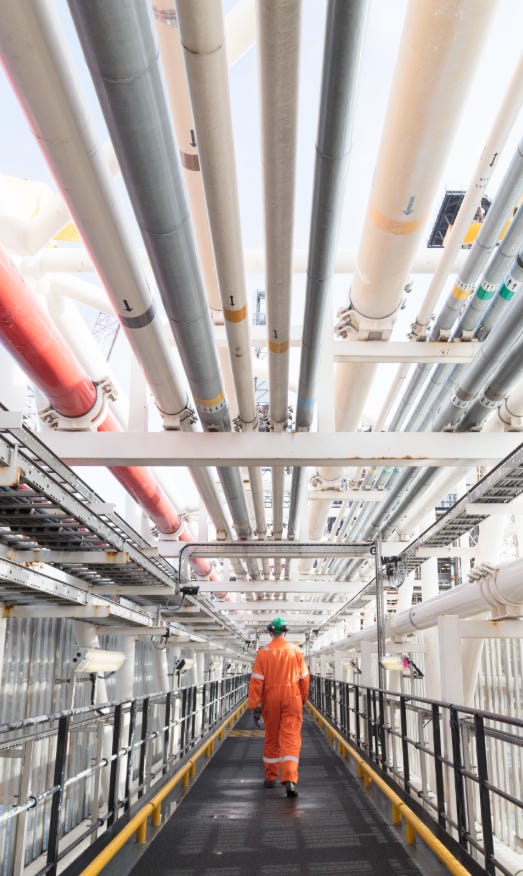
My first purchases were in the $32 range in April of 2024, which at the time, adjusted for a large one time tax benefit was an 8x P/E (sub 4 P/E on an unadjusted, TTM basis). The multiple has basically not expanded, which is typically the way I do a discounted cash flow analysis - assuming the market will not discover nor reward the business in any way different in the future. I seek a margin of safety by assuming this and simply accepting expansion as upside. With the movement in Q1 of 25’, I’ve breached a 70% Holding Period Return.
Direct from the latest annual report, “The Company generated $4.5 billion of cash from operating activities in 2025, which was $925 million or 26 percent higher than 2024. APA’s higher operating cash flows for 2025 were primarily driven by the collection of outstanding receivables, lower overall expenses, and timing of other working capital items. The Company repurchased 12.9 million shares of its common stock for $280 million and paid $360 million in dividends to APA common stockholders during 2025. The Company ended the year with approximately $4.5 billion of debt, a reduction of approximately $1.6 billion from the end of 2024.”
With a 27% reduction in net debt and several quarters of earnings beats in a challenging environment, Apache has been operating well. Yet to answer the question as to why I was so confident to invest in a bottom-cycle commodity company, given Net debt, declining prospects, and outlook. The answer is GranMorgu.
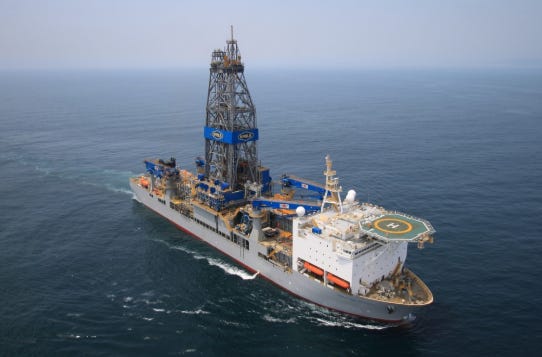
The Middle East has the world’s lowest production cost, with Saudi Arabia and Kuwait approaching $10-20 per barrel on a structural basis. GranMorgu is a Tier-1, open water accessible joint venture between Total and Apache; Block 58 as it’s known, lies in Suriname off the cost of Guyana in South America. It contains an estimated 750 million barrels of recoverable oil with a breakeven estimated at $35 - $40 a barrel (for Apache — Exxon & Chevron have an even lower breakeven on their nearby blocks) vs the $50-$60 a barrel in the Permian fields of North America. Apache has ordered a low carbon, all electric floating rig; almost like a floating city these architectures maximize every watt and minimize the carbon dioxide.
Buffett has said (as has Bruce Greenwald) that when you are selling something indistinguishable from a competitor’s product you only have one way to win: be the low-cost producer. Apache is certainly not the lowest cost producer, but with Block 58 it certainly has a case for quality assets that can be made.
My other oil and gas holding, the company I have had on DRIP since my late 20s after reading Private Empire by Steve Coll, Exxon Mobil (XOM), has seen it’s share price hit an all time high as well. Exxon is likely the biggest winner of this situation along with Chevron; both are producing record volumes of production from the offshore waters of Guyana and the Permian Basin, relatively unaffected by the tumult caused by operation Midnight Hammer.
Buying Apache, was buying was top 5% asset when the rest of the market sold it for a bargain price.
All I needed to do was buy it at the right price, and the right time.
Full Disclosure: I have traded around the position and sold a considerable number of shares into strength throughout the run up.
The author of this post is not a registered investment advisor. The information provided in this newsletter is for educational and informational purposes only and does not constitute professional financial advice. All investments involve risk, and the past performance of any individual stock, sector, or strategy does not guarantee future results or returns.
At the time of this writing, the author maintains a long position in APA Corporation (APA). This position may change at any time without notice. The author has not received any compensation from APA Corporation or any third party for the production of this content.